
Trauma Bonds
When trauma bonding occurs, it can be confusing, overwhelming and difficult to leave the abusive situation. This can also happen to anyone! You shouldn’t feel embarrassed, weak or incapable.
By Erinn Williams, LCPC
Just leave. Walk away. Move on. For those that have been involved in a toxic relationship (or watched a loved one go through one), it’s sometimes not as easy to break free as you’d think when a trauma bond has formed.
Trauma bonding is an emotional attachment that an abused person feels for their abuser, that develops out of a repeated cycle of negative abuse and positive reinforcement. After the abuse occurs, the abuser professes love, regret and attempts to make the relationship feel like a safe space again. The abuse can be emotional, physical or both. Trauma bonding can happen in a romantic relationship, between family members or friends and in the workplace (to name a few).
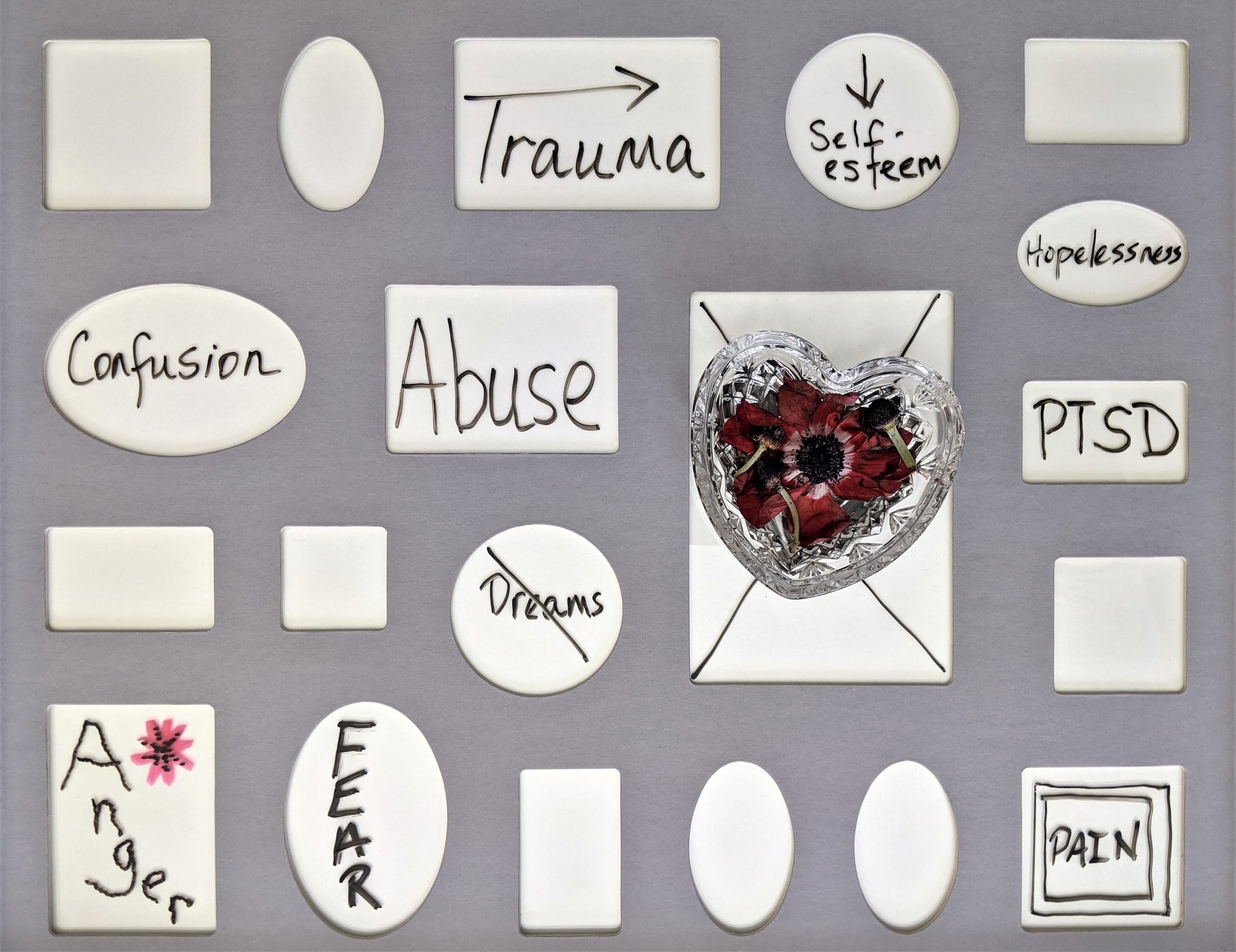
When trauma bonding occurs, it can be confusing, overwhelming and difficult to leave the abusive situation. This can also happen to anyone! You shouldn’t feel embarrassed, weak or incapable.
Through this cycle, the abused believes that things will get better, which is why they stay. The emotional dependency and bond to the abuser and relationship can be quite resistant to change.
Our brains can process trauma in different ways. As a result, a trauma survivor can often disconnect from their own sense of self, disregarding their own needs and values.
SIGNS OF TRAUMA BONDING
Unfortunately, trauma bonding can happen in a variety of abusive situations; in both new and long-term relationships. The abusive person can have an extremely charming facade at first. They might blame the abused for their mood changes. They might isolate them from their loved ones. They might repeatedly break promises and switch unpredictably between emotions.
On the other side, the abused person might make up excuses or brush aside the abuser’s harmful actions. They might lie to family and friends about the abuse. They might find themselves altering their behavior to avoid setting off the abuser and over time, grow numb to the abuse itself, basically normalizing it in their mind.
From an outsider’s perspective it can be tough to understand how someone in such a negative situation could still experience feelings of love and dependence for the person or people abusing them. In a trauma bond cycle, the abused holds on to the instances where the abused is kind to them.
Attachment is a basic human need that is important for survival and victims of trauma bonding can become so dependent on their abuser, that they don’t see a way out.
BREAKING TRAUMA BONDS
Escaping from a trauma bond can take time, effort and often professional assistance is needed to help the abused remove themselves from the destructive situation. For the abused:
Acknowledge that you have a choice to leave
Physically separate yourself from the abuser
Stop communication with the abuser
Recognize the signs of abuse
Figure out how you got here in the first place
Identify boundaries for your next relationship
Develop a network of support: friends, family and mental health professionals
Practice self-compassion and care; mentally and physically
Therapy is a fantastic tool for helping move past trauma! When we leave an abusive situation, there are complicated emotions that come along with it. As therapists, we are here to help you understand and guide you through these emotions, not to mention help you see the warning signs of abuse that could occur in future situations.
Remember, abuse is not the victim’s fault and trauma bonding is not the victim’s fault, either! Healing takes time and there are tools to help break down the bonds that once existed in an abusive relationship.
Tending to Pain in Others and Yourself
Emotional wounds, or deep-seated psychological and emotional pain, can develop in a number of ways. Some wounds happen immediately, such as after witnessing the death of a friend. Others develop over time as a result of repeated experiences like parental neglect, unhealthy relationships, and systemic racism.
Emotional wounds impact the way we perceive and interact with the world around us, yet they can often go undetected, even by ourselves. Internalizing and externalizing behaviors often show up as a result of emotional pain but to the untrained eye can often be excused as personality traits like shyness or aggression. Instead of dismissing or shaming ourselves and others, we can learn to recognize the following four symptoms as alarm bells signaling the existence of pain and the need for healing.
By Mary Claire Schibelka, LPC
Emotional wounds, or deep-seated psychological and emotional pain, can develop in a number of ways. Some wounds happen immediately, such as after witnessing the death of a friend. Others develop over time as a result of repeated experiences like parental neglect, unhealthy relationships, and systemic racism.
Emotional wounds impact the way we perceive and interact with the world around us, yet they can often go undetected, even by ourselves. Internalizing and externalizing behaviors often show up as a result of emotional pain but to the untrained eye can often be excused as personality traits like shyness or aggression. Instead of dismissing or shaming ourselves and others, we can learn to recognize the following four symptoms as alarm bells signaling the existence of pain and the need for healing.
Resentment
Imagine you have plans to meet a friend for coffee at 4pm. It’s 3:45, and she texts you saying she’s going to be late because she’s stuck in traffic. Immediately, the boiling feeling of anger washes over you and you find yourself thinking, “Wow, she really doesn’t know how to plan effectively, does she? How immature.” That’s resentment.
While resentment may easily be mistaken for a bad attitude, it could be a sign of pain below the surface. When examined more closely, anger about a friend being late to a get-together might be related to feelings of loneliness caused by your mother being late to pick you up from school each day, or maybe you were repeatedly shamed for being late as a child, causing you a great deal of embarrassment.
Retreat
While alone-time can be a great way to recharge, especially for introverts, ongoing social withdrawal is a telltale sign of depression and can also be associated with anxiety, eating disorders, trauma, and addiction. Next time you feel like cancelling plans or turning down an invite, ask yourself why. If you notice friends beginning to retreat, get curious about their reasons. They could be struggling emotionally. Also, remember that it is often painful and possibly even retraumatizing for people from marginalized groups to be in spaces where nobody else shares a similar identity.
Lashing Out
When we experience trauma, our brains enter fight, flight, or freeze mode. Repeated trauma can cause our brains and bodies to get “stuck” in fight mode, therefore causing verbal and physical combativeness as a form of self-protection. What one might perceive as a relatively small or insignificant event can trigger a trauma response, therefore resulting in what can seem like a disproportionate reaction. For instance, a person who lost a friend in a car accident might exhibit an explosive amount of road rage after being cut off by another driver on the highway.
Demands
To an emotionally wounded person, making demands can seem like the only way to achieve a desired outcome. In certain situations, this is healthy and necessary, such as when an oppressed group of people demands justice and fair treatment. At other times, making demands can be harmful. For instance, if you were cheated on in a past relationship, demanding that your partner let you go through his or her phone will likely cause trouble without doing much to resolve past hurts. Either way, demands are often responses to emotional pain and fear of further suffering.
Caring for Emotional Wounds
Like physical wounds, emotional wounds tend to heal over time when properly treated. When left unrecognized, they can fester, resulting in broken relationships and continuation or deepening of pain. Talking about emotional wounds can be difficult, and ignoring our pain can be a seductive alternative, but like physical wounds, the only way to heal an emotional wound is to notice it, ask for help, and clean it out.
Although it can feel scary, asking friends how they are doing if you’ve noticed the behaviors above might be exactly what they need. Having someone see their struggles can feel like a huge relief and lift the burden of them having to come to you. Like when you make yourself available for a friend, naming your own pain is a way to give yourself compassion and practice self-care. If you are struggling with difficult emotions, get curious about them. Ask yourself where they might be coming from and if there is an even deeper root to them.
Often, when someone is facing painful emotions, advice and reassurance are not as helpful as the simple act of listening. If you are seeking to be an ally or support somebody going through a difficult time, refrain from giving your opinion or offering solutions. Instead, listen with compassion and express a genuine interest in learning more about the other person’s experience. If you are the person in pain, allow others to hear you, even if they don’t have all the right answers. A burden feels lighter when you aren’t carrying it alone.
There are certain situations in which action is necessary. Some examples include dismantling systemic racism and getting out of an abusive relationship. After allowing friends to share their experiences with you, ask them what you are able to do to help. When working to heal your own emotional wounds, ask yourself what action steps you need to take and what friends and other people you trust can do to support you.
The Power of Time
Many emotional wounds were not developed in a day, and likewise, they will take time to heal. As you venture down the path of healing your own emotional wounds or supporting friends as they navigate their own, practice patience and compassion. Manage your expectations of the healing process by acknowledging that healing is not linear. Go easy on yourself and others when imperfections arise. Most importantly, celebrate the small victories, believing that eventually, they will amount to progress much greater than you ever thought possible.
What I Learned From a Week of Listening
Growing up, I never thought of myself as racist. In fact, I thought of myself as fundamentally not-racist. The neighborhoods I lived in were always somewhat diverse, and my mom, my sister, and I all have friends of color. I have black cousins and Chinese cousins. My parents raised me with good values. “Never judge anybody by the color of their skin,” they said.
By Mary Claire Schibelka, LPC
Growing up, I never thought of myself as racist. In fact, I thought of myself as fundamentally not-racist. The neighborhoods I lived in were always somewhat diverse, and my mom, my sister, and I all have friends of color. I have black cousins and Chinese cousins. My parents raised me with good values. “Never judge anybody by the color of their skin,” they said.
I thought I knew what racism was. I’ve heard people say horrible things about different groups of people. Plenty of times, I’ve stood up against their hateful words, believing that because I didn’t hold their same beliefs, I was one of the good guys. It’s easy not to think too much about something when you think you already have it down.
The unjust killings of black people in America have always troubled me, but when I saw the video of George Floyd’s death, it hit me differently. Something inside me woke up, and I realized that if I want to see change, then I need to be an active participant in bringing it about. Sitting back and being nice to everybody was never enough.
It’s in my nature to fight for people. I’m a counselor. I help. I tell people how to fix problems. However, right now, that is not my job. Instead, my duty is to practice the most important skill a person in my field can possess. I need to listen, specifically to voices that have been silenced for far too long. Then, I have to share what I learn, not with the people most affected by racism, for they already know, but with those who are the same as I was - well-intentioned and dangerously unaware.
This is what I learned this week:
1) Slavery Was Only Six Generations Ago
When I learned about slavery for the first time in elementary school, it felt so far away. The possibility that people could be treated in such a way felt unreal to me, like it was something that happened in ancient times. It wasn’t until this week that I realized 1865, the year slavery was outlawed, was only six generations ago. The Ku Klux Klan was considered a legitimate and strong political influence in 1925, just four generations ago. Segregation ended two generations ago, and if your parents were born before 1967, they lived during a time when interracial marriage was still prohibited in certain states. In 2014, a study from the University of Michigan1 revealed that black people are sentenced to 10% longer sentences than white people who committed the same crimes with similar criminal histories. When looking at history through this lens, it becomes clear that if we believe systemic racism is a thing of the past, we are kidding ourselves.
2) Intergenerational Trauma
The effects of trauma can be passed down through generations by genetics, modeled behavior, and the retelling of sad stories. Intergenerational trauma can manifest as a variety of mental health issues that impact relationships and families.
For instance, imagine that your grandmother grew up being told she wasn’t allowed to eat in the same restaurants as people who looked different from her. Imagine she was told every day she was dirty, ugly, and inferior. How would that affect her mental health? How would that affect the way she raised your mother?
Now imagine your mother grew up in a household where her parents, although they loved each other, were not allowed to get married. Your grandmother was told by the government that she wasn’t good enough to marry your mother’s father. Their relationship was called disgusting and unnatural. How would your mother see herself as their daughter? What would her own relationships be like?
Finally, imagine yourself. Imagine growing up with a mother who was depressed, believing that her own existence was wrong. How would that impact your childhood? Your mental health? Your family dynamics?
Intergenerational trauma is insidious and often goes undetected due to the belief that trauma only occurs when people experience something like war or physical abuse. Racism is traumatic, and if we want to understand the world we live in, we must acknowledge that its effects are real and present in the people of color around us every day. Also, we must recognize the intergenerational transmission of beliefs in white culture. What were we taught about people of color from our own families and environments, even in the most subtle ways?
3) There Is a Difference Between Color and Culture
I came across an article by Greg Armstrong, pastor at Renew Church in Lombard, Illinois2. In the article, Armstrong recalls his experiences as a black man attending majority white churches. He states that while most white church goers were okay with the color of his skin, he quickly realized that he was only truly accepted when he assimilated and acted according to their cultural norms.
We say we don’t have a problem with black people, but do we have a problem with blackness? I have heard statements like, “I like people of all races, I just don’t like people who act _______.” Fill in the blank. Every culture in the world, whether defined by race, location, religion, or gender identity, has its own set of cultural norms and behaviors. What kinds of judgments do we have about black culture? Do we even know what it is? These questions might feel jarring, but if we truly want to reject racism, we must begin to ask them.
Sitting with Discomfort
Learning what I learned this week was uncomfortable for me. Writing this article was extremely uncomfortable for me. The entire time, I questioned whether I was coming off “too preachy”, insensitive, discriminatory, or like a know-it-all. These conversations are certainly not easy to have. What I’ve learned during this time, though, is that we cannot allow ourselves the luxury of being comfortable when those most closely affected by racism have never had that same privilege.
I am not an expert on race, and because I do not experience racism first hand, I will never know everything there is to know about it. You don’t have to be an expert either to make a difference, but what we all must do is take a stand by uncomfortably acknowledging that there is no such thing as “not-racist”. We need to look at the painful facts about our country and understand why neutrality is not possible. Then, we need to pick a side: racist or anti-racist. This week, I chose my side. Which do you choose? What are you going to do about it?