
Trauma Bonds
When trauma bonding occurs, it can be confusing, overwhelming and difficult to leave the abusive situation. This can also happen to anyone! You shouldn’t feel embarrassed, weak or incapable.
By Erinn Williams, LCPC
Just leave. Walk away. Move on. For those that have been involved in a toxic relationship (or watched a loved one go through one), it’s sometimes not as easy to break free as you’d think when a trauma bond has formed.
Trauma bonding is an emotional attachment that an abused person feels for their abuser, that develops out of a repeated cycle of negative abuse and positive reinforcement. After the abuse occurs, the abuser professes love, regret and attempts to make the relationship feel like a safe space again. The abuse can be emotional, physical or both. Trauma bonding can happen in a romantic relationship, between family members or friends and in the workplace (to name a few).
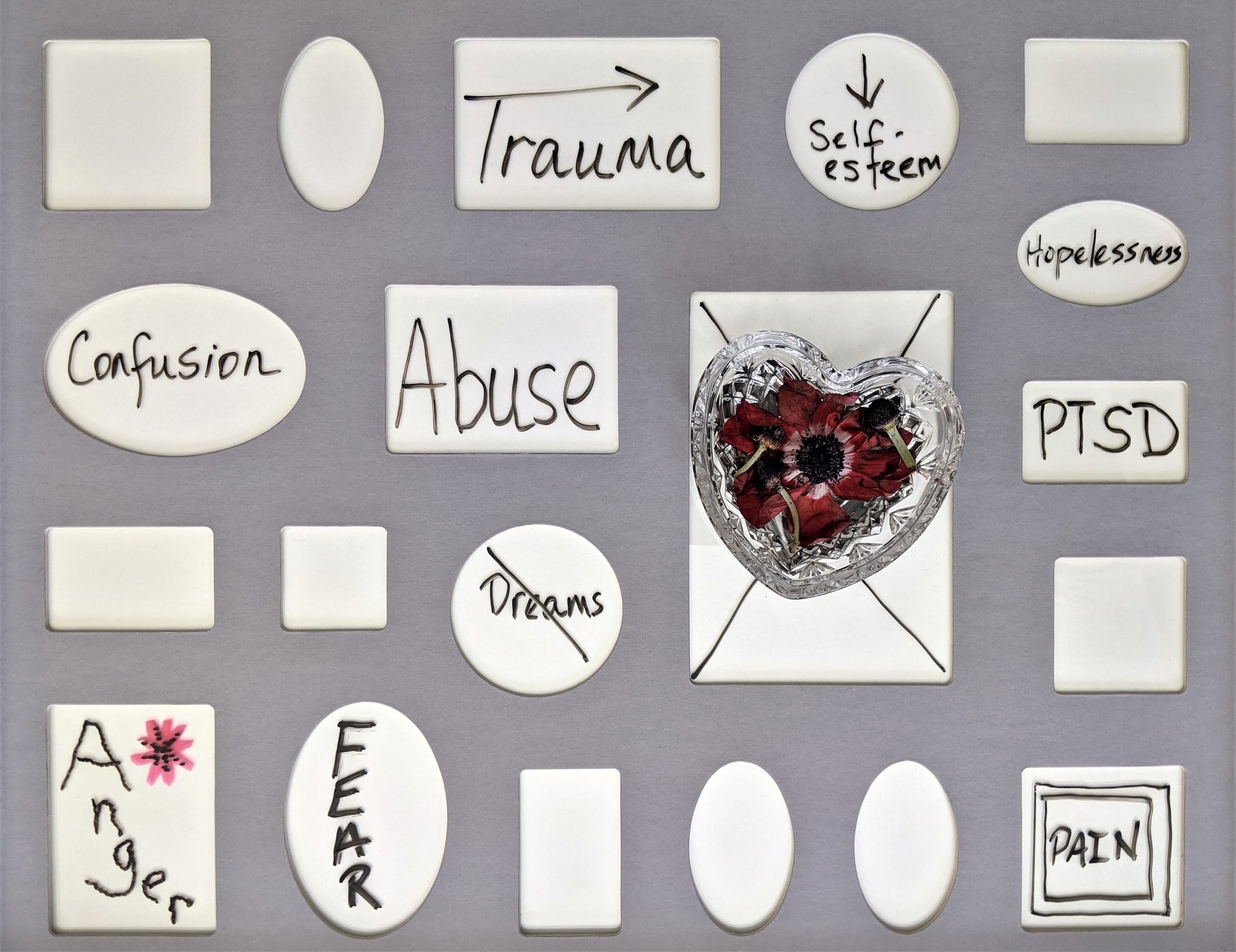
When trauma bonding occurs, it can be confusing, overwhelming and difficult to leave the abusive situation. This can also happen to anyone! You shouldn’t feel embarrassed, weak or incapable.
Through this cycle, the abused believes that things will get better, which is why they stay. The emotional dependency and bond to the abuser and relationship can be quite resistant to change.
Our brains can process trauma in different ways. As a result, a trauma survivor can often disconnect from their own sense of self, disregarding their own needs and values.
SIGNS OF TRAUMA BONDING
Unfortunately, trauma bonding can happen in a variety of abusive situations; in both new and long-term relationships. The abusive person can have an extremely charming facade at first. They might blame the abused for their mood changes. They might isolate them from their loved ones. They might repeatedly break promises and switch unpredictably between emotions.
On the other side, the abused person might make up excuses or brush aside the abuser’s harmful actions. They might lie to family and friends about the abuse. They might find themselves altering their behavior to avoid setting off the abuser and over time, grow numb to the abuse itself, basically normalizing it in their mind.
From an outsider’s perspective it can be tough to understand how someone in such a negative situation could still experience feelings of love and dependence for the person or people abusing them. In a trauma bond cycle, the abused holds on to the instances where the abused is kind to them.
Attachment is a basic human need that is important for survival and victims of trauma bonding can become so dependent on their abuser, that they don’t see a way out.
BREAKING TRAUMA BONDS
Escaping from a trauma bond can take time, effort and often professional assistance is needed to help the abused remove themselves from the destructive situation. For the abused:
Acknowledge that you have a choice to leave
Physically separate yourself from the abuser
Stop communication with the abuser
Recognize the signs of abuse
Figure out how you got here in the first place
Identify boundaries for your next relationship
Develop a network of support: friends, family and mental health professionals
Practice self-compassion and care; mentally and physically
Therapy is a fantastic tool for helping move past trauma! When we leave an abusive situation, there are complicated emotions that come along with it. As therapists, we are here to help you understand and guide you through these emotions, not to mention help you see the warning signs of abuse that could occur in future situations.
Remember, abuse is not the victim’s fault and trauma bonding is not the victim’s fault, either! Healing takes time and there are tools to help break down the bonds that once existed in an abusive relationship.
3 Tips To Maximize Your Productivity Without Sacrificing Your Mental Health
I don’t know about you, but sometimes, I feel like society sends us nonstop conflicting messages. Lately, I’ve been thinking about productivity, goal-accomplishment, self-care, and what it really means to live a fulfilling life.
By Mary Claire Schibelka, LPC
I don’t know about you, but sometimes, I feel like society sends us nonstop conflicting messages. Lately, I’ve been thinking about productivity, goal-accomplishment, self-care, and what it really means to live a fulfilling life.
In one camp, we hear messages like, “Never give up on your dreams,” and “Do more to get more.” We also live in a side-hustle culture, where it’s more popular than ever to pay bills with your 9-to-5 and grind on evenings and weekends to afford dinners out, Lolla tickets, and Instagrammable vacations.

On the other side, we hear, “Your worth does not lie in your productivity.” “It’s okay to fail.” “You need to take time off for self-care.” “Tell your boss you’ve set a boundary and will no longer be working past 6pm.”
But what if you want to work hard to start a business or afford the finer things in life? What if you want that, and you still want to watch your favorite TV show and go out for spontaneous drinks with friends? Can you do both?
These questions sent me on a journey this week to research how you can kill it in your career, knock out a substantial amount of to-do list items each day, and still have time to take care of yourself and live a fulfilling life, because let’s be honest- all work and no play just isn’t it.
Here are 3 of the most important tips I’ve learned:
Be Picky with Your Friends
When you’re a career-driven person, your time is very valuable. Spending it with people you don’t really enjoy can feel like a waste. Instead, choose to spend time with friends who recharge and motivate you to be the best version of yourself. Time with these kinds of people will be fun, and it will also prepare you to work hard when you’re ready to get back to it.
Do Self-Care That Works
It seems easy, but figuring out which self-care activities actually rejuvenate you takes work! You probably hear a lot about journaling, taking bubble baths, getting your nails done, and meditating, but self-care can include so much more. Self-care can include anything, like running, painting, shopping, gardening, seeing a movie, crossfit, cooking, cleaning, fixing cars...anything! Experiment and find out what you enjoy in order to get the most out of your self-care time.
Create Routines
I know this one can be cringy. Especially if you’re more Type B or spontaneous. But it really works. Creating daily and weekly routines helps you consolidate your productivity into a preselected amount of hours. In other words, it helps you get stuff done in a reasonable amount of time, so you can finish tasks and get out there and enjoy life. You can Google “successful peoples’ morning routines” for ideas, and then customize them to be doable for you.
Even though it sometimes seems like productivity and mental health are mutually exclusive, the truth is they really can coexist. Be mindful about how you use your time and who you spend it with. Staying focused during times you assign for work will allow you to relax and enjoy socializing and self-care during your much-needed breaks.
Related Articles
You Can Have It All: Expert Secrets To Balancing Love and Your Career
Troubleshooting Your Goals: Lessons from a Therapist’s Career Journey
Sometimes, You Just Gotta Jump
Have you ever had one of those nightmares where you’re expected to perform a task at work you have no idea how to do? If so, you’re familiar with the panic and humiliation that comes from being completely unprepared. Maybe this has even happened to you in real life! Nobody wants to go into something important without preparing first. Whether it’s school, a new job, or a race, adequate planning and training can help you feel more confident and perform better.
By Mary Claire Schibelka, LPC
Have you ever had one of those nightmares where you’re expected to perform a task at work you have no idea how to do? If so, you’re familiar with the panic and humiliation that comes from being completely unprepared. Maybe this has even happened to you in real life! Nobody wants to go into something important without preparing first. Whether it’s school, a new job, or a race, adequate planning and training can help you feel more confident and perform better.
Now, ask yourself this: Have I ever prepared for something so much that I missed out on time or opportunities to start or complete the task itself? This a problem that while just as common, is far less mentioned.
In American society, education is valued. Chicago alone is home to over 35 colleges and universities. Search the internet for any particular topic, and you are likely to find millions of results worth of information. In modern society, opportunities to learn, whether formally or informally, are endless.
Education is great, and I would strongly advise anyone who is thinking of beginning a new career path, starting a business, or even adopting a puppy to do their research first. However, over-preparing becomes a problem when it becomes perfectionistic, its costs outweighing the benefits of imperfect action.
Young adults might struggle with over-preparing while researching college majors or beginning new jobs. The temptation to rest in the comfort of planning while avoiding taking action can present itself later in life too, such as before moving to a new place or taking a new step in your career.
No amount of reading can teach you what you learn from actually experiencing a new situation head-on. Researching different career paths is important, but real learning happens in the field where you can develop skills, build your resume, and network. Reading a book about skydiving can teach you about the experience, you’ll never fully understand what it’s like until you do it yourself. At some point, you have to jump.
Failure is viewed as a negative thing, which is surprising. Failure plays a necessary role in the learning process. Learn the stories of the people you look up to the most. You will find that somewhere in their journey, they experienced failure. Failure makes a great teacher. It gives us the opportunity to learn things we otherwise wouldn’t have had the chance to learn- things that pay off. So why avoid it?
Give yourself permission to do difficult things, even if you don’t feel 100% ready. Know that you probably never will feel 100% ready but that you’ll learn everything you need along the way. Start going to classes anyways. Learn about what you like and don’t like. Start a YouTube channel with your iPhone camera. You can buy a new one later. Stop waiting for everything to be perfect. It never will be. Instead, just start. Take a leap of faith. Trust the knowledge you have to be your parachute, and jump.
Find your work flow
Love what you’ll do, and you’ll never work a day in your life. That’s the common phrase. Love when you do it, and you might never have to work another night in your life either. Somewhere along the line, humans decided that the most efficient workday exists between 9 AM and 5 PM. Oh, the good ole’ 9 to 5. Covet or hate it, this routine style of working has truly made a name for itself.
By Mary Claire Schibelka, LPC
Love what you’ll do, and you’ll never work a day in your life. That’s the common phrase. Love when you do it, and you might never have to work another night in your life either. Somewhere along the line, humans decided that the most efficient workday exists between 9 AM and 5 PM. Oh, the good ole’ 9 to 5. Covet or hate it, this routine style of working has truly made a name for itself.
It makes sense. With the sun and fire as their only light sources, workers throughout history earned by day and played by night. Evening was a time for recreation, restoration, and connection.
But in today’s modern world, technology allows work to creep into all hours of the day and night, easily distracting from personal activities. Especially in the midst of COVID-19 and the resulting boom in working from home, the lines between the workday and the weekend can easily grow blurry. While the hustle may feel exhilarating and even enjoyable for some, others find themselves exhausted by the end of the week.
Tom Hodgkinson is the author of bestselling books How to Be Idle and The Freedom Manifesto. His remedy for burnout is quite the opposite of what you might think. Founder of the magazine and curriculum, The Idler, Hodgkinson believes that regularly stepping away from work, or idling, is the key to not only happiness but also professional achievement.
In a May 2020 episode of The Happiness Lab, a podcast hosted by Yale professor and happiness researcher Dr. Laurie Santos, Hodgkins lists several examples of idle activities including taking walks with friends, napping, hour-long lunch breaks, and traveling- all with no work allowed.
Hodgkins explains that when we allow ourselves uninterrupted down time, our work performance and personal satisfaction bloom. We create room for creativity, rest, and enjoyment. At the same time, we replenish our energy and return to work with more drive.
Idling can be done at any time. Nine to five workers might idle mostly at night, while remote workers can idle with more flexibility. The goal is to relish the idle moments. Regardless of when you work, your level of fulfillment impacts the way you show up, and this makes a difference.
In her Boston Globe Article, “Millennials aren’t lazy, they’re workaholics,” writer Katie Johnston points out anxiety’s correlation with lower career satisfaction, lower productivity, and fewer monetary bonuses. Anxiety often interferes with motivation and the ability to focus, thus drastically reducing work performance. It can also impede social behaviors necessary for good workplace relationship.
Unlike Hodgkins, you might not see napping from 2 to 4 PM as feasible or even ideal. The 9 to 5 is just as enjoyable to some as its more unstructured alternatives are to others. If you find yourself, though, stuck in the grind, fear not.
Constantly, new remote and time-flexible job positions are created. Because of modern technology, teachers can virtually instruct classes in different timezones. Business owners can work behind the scenes at all hours. First responders and service industry professionals who prefer working at night can clock in after resting during the earlier hours of the day.
What is your ideal work style? This is a question infrequently asked at high schools and universities. We are so often expected to talk about what we like to do, but not how we like to do it. Without this knowledge, we can accidentally wind up in careers that suffocate our passion instead of fanning it. Once you notice the natural ebbs and flows of your energy throughout the day, you can begin to develop a career consistent with your preferred work schedule.
Hodgkinson’s journey is a reminder that gaining the flexibility you desire in your career might take time. He admits to having worked several jobs before finding his balance of work and idleness. If you’re working in what I call a “stepping stone job”- one that feels particularly unstimulating and unsustainable- ask yourself these three questions: What skills do I want to continue developing in the next phase of my career? How do I want my next work environment to differ from this one? How can I use my strengths in new ways?
Finding your work flow can feel challenging. Start small by rethinking how you spend your little sprinkles of time throughout the day. Consider stretching, walking, cooking, or calling a friend whenever possible. Replace mindless activities with more pleasurable ones when necessary. And if it works for you, embrace the two-hour nap.
Trying to Control Your Partner: a Hindrance, Not a Help
What happens in a relationship when you try to bridge the gap between what you want and what you have? Control issues pop up. If you’ve ever found yourself saying or thinking things like:
“You should do/think/act like this”
“I’d be happy if only you’d...”
“You would be more _______ if you loved me”
“I need you to be more like so-and-so”
then chances are you are trying to control your partner. Trying to control your partner can lead to major issues for a couple. Let’s explore why some of us attempt to assert our control and why it ultimately is not healthy in your relationship!
By Erinn Williams, LCPC
What happens in a relationship when you try to bridge the gap between what you want and what you have? Control issues pop up. If you’ve ever found yourself saying or thinking things like:
“You should do/think/act like this”
“I’d be happy if only you’d...”
“You would be more _______ if you loved me”
“I need you to be more like so-and-so”
then chances are you are trying to control your partner. Trying to control your partner can lead to major issues for a couple. Let’s explore why some of us attempt to assert our control and why it ultimately is not healthy in your relationship!
Why do we attempt to control our partners? We tend to find ourselves partnered with people who display the same traits we attached to growing up. In other words, we marry/partner with versions of our parents.
In relationships we work out our past with our partners. Matching with someone who has similar traits as our parents can be seen as an attempt to heal our unfinished business. In the worst cases, our relationships trigger so much past pain that we can’t recover and the relationship ends. In the best cases, we work through these triggers and heal from our past through and with our partners.
“If only he wasn’t so controlling, like my mom” or “I need him to be more connected, unlike my dad” are examples of ways we attempt to control our partners while attempting to heal from our past. Unconsciously we believe that if our partners would just act the way we want them to act, we would see these issues resolve themselves.
That seems great in theory, but have you ever felt like someone was trying to control you? How did that go? Terry Real, author of The New Rules of Marriage: What You Need to Know to Make Love Work states, “Here’s the real deal on control: It’s an illusion. Short of outright collusion or holding a gun to someone’s head, nobody gets anyone to do anything. Which, unfortunately, doesn’t mean you won’t try.”
Love and connection cannot thrive when control and oppression are present. Our partners may comply when we attempt to control them, but it comes at a cost. Often the consequences of controlling our partners look like rebellion, either quietly or quite overtly. Sometimes you may see your partner become more and more resentful, and they may feel like a martyr in the relationship. Other times, the thing you want your partner to change may become exaggerated the more that you push. All of this gets worse when you feel like you need to be right all the time.
It’s not so much that you can’t ask things of your partner or express your needs in the relationship. The strategy to get through the control tendency is two-fold. First, recognize if this is you. If you are attempting to change your partner in any way, own it. Be clear to yourself about why you want them to change, not just what you want them to change. Is it for their own good? Is it for the good of the relationship? Or is it particularly sensitive to you because this was a painful part of your past?
When talking to your partner instead of asserting your control, use phrases like “I need...,” “I feel hurt when…,” or “In this moment can you…” These phrases convey more of a specific need you are trying to express rather than a general criticism of something they need to change. When you find yourself being manipulative (you know who you are and you know when you are doing it), take a break from the conversation.
Secondly, work toward healing these wounds yourself. If you didn’t feel seen by your mom growing up, work toward feeling healthy, self-compassionate individuality as an adult. If you were often fearful of your dad, work to recognize the power you hold as the mature adult that you are. Often therapy, tapping into spirituality, and active reflection can help with this process. When we work to recover from past wounds, we become a much better partner than when we expect our partners to heal these wounds for us.
An Extrovert’s Guide to Summer 2020
I think it’s safe to say that six months ago, nobody anticipated Summer 2020 to look quite like this. While Chicago is beginning to return to normal (whatever that means anymore), things are still very different. Beaches are closed, concerts and festivals are cancelled, and bars, restaurants, and nightclubs are operating on a seriously limited basis.
Extroverts around the city already had to endure three solid months of strict quarantining.
By Mary Claire Schibelka, LPC
I think it’s safe to say that six months ago, nobody anticipated Summer 2020 to look quite like this. While Chicago is beginning to return to normal (whatever that means anymore), things are still very different. Beaches are closed, concerts and festivals are cancelled, and bars, restaurants, and nightclubs are operating on a seriously limited basis.
Extroverts around the city already had to endure three solid months of strict quarantining. In March, when nonessential businesses were ordered to close, many did not expect social distancing orders to carry into the summer months. Now that it’s almost July, the hope for a typical summer is dwindling, but don’t give up yet, extroverts! All hope is not lost. In fact, by taking advantage of the opportunity to try new things that used to come second to bar and restaurant-hopping, this might just turn out to be your best summer yet.
Maintain Your Social Circle
One of the most well-known qualities of extroverts is that they thrive in large social groups. While group gatherings are not currently recommended, there are ways to get together with friends while maintaining a safe social distance. Socially-distanced picnics are a great idea! Each person can bring their own blanket and food allowing you to stay 6-feet apart while chatting. If you’re still not comfortable going out unless absolutely necessary, check out the Houseparty app, where you and multiple friends can video chat while playing built-in games. Pro tip: video chat on your porch, balcony, or fire escape so you can soak up the summer air while socializing from home.
Find New Sources of Pizzazz
Extroverts can often be described as risk-takers or adrenaline-seekers. They look for the spice in life and enjoy excitement. This summer, seek out new ways to feel stimulated, such as walking around foreign parts of the city or venturing out to a state park. Take up adventurous hobbies like rock climbing, water skiing, or distance running. Get creative and think about what makes you feel alive. Then, pursue those things to keep your energy level up while certain aspects of the city still feel shut down.
Meet New People
This one might seem hard to do with social distancing guidelines in place, but with the internet, meeting new people can be easy! Many social groups and clubs have continued to meet throughout the duration of COVID-19. Ask yourself what kinds of people you would like to add to your social network. What common interests would you like to share? Check out Facebook and Meetup to find virtual get togethers and free your inner social butterfly.
The coronavirus crisis has likely put a damper on some of your summer plans, especially if you’re an extrovert. Many of your favorite warm weather activities may no longer be in the cards. I challenge you, though, to look beyond the things you are used to doing, examine your inner strengths and desires, and find new ways to capitalize on them. Who knows, you might discover a new hobby, favorite place, or even a talent you never knew you had.